
Historic Home TV Mounting in Santa Ana
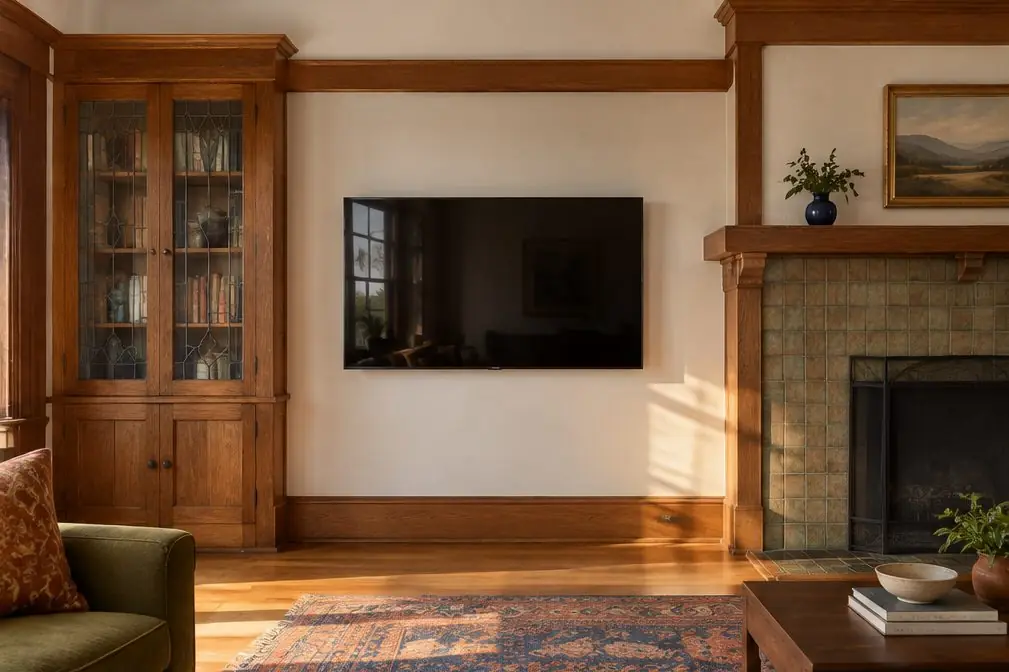
TV Mounting Frame Santa Ana covers TV mounting in the older houses of Santa Ana — Craftsman bungalows, Spanish and Mediterranean revival homes and Tudor cottages from the 1910s to the 1940s — where plaster over wood lath, built-in cabinetry and original trim set the pace and the careful part is not the mount but the wall it goes on.

Bookings aren't open yet. Leave your name and number; your message is recorded, and you'll get one message when a local installer is available.
 Illustration
Plaster over lath, and how a bolt reaches the stud
Many 1910s–1940s homes have plaster over wood lath; the installer finds the studs, drills slowly and protects the plaster finish. Lath hides studs from many finders, plaster chips under a fast bit, and the layer is thick, so the bolts are longer than for drywall.
| Step | What is done | Why |
|---|---|---|
| Probe | A small test hole under the plate | Proves the stud edge the finder suggests |
| Pilot | Carbide bit, low speed, hammer off | The plaster cracks less |
| Bolt | A long lag bolt through plaster and lath into the stud | The load goes into the wood |
| Plate | Level before the last turn | A plate pulled crooked can crack the finish around it |
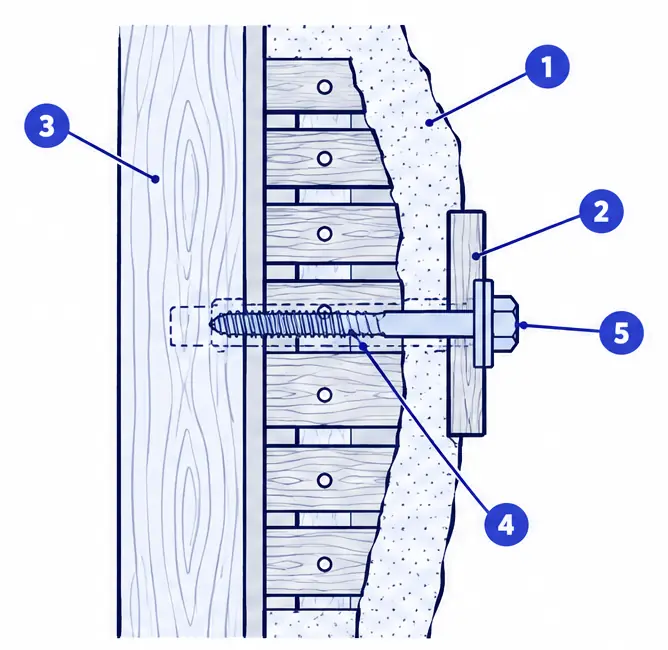
What the numbers show
- Plaster coat A thick coat that chips under a fast bit; tape and a slow drill protect it.
- Lath strip Narrow wood strips under the plaster, with small gaps the plaster pushes into.
- The stud behind The only part of the wall that holds the plate; found by probe.
- Pilot hole A pilot hole drilled slowly keeps the plaster from cracking and guides the bolt.
- Longer lag bolt The bolt must pass plaster and lath before it reaches deep into the stud.
Leaving original features alone
Original features such as built-ins, fireplace surrounds, tile and trim are worth keeping; owners often choose a mount position or a surface cable route that leaves them untouched. A TV beside a bookcase instead of in front of it, or a cable that follows the picture rail, costs little and changes nothing permanently.
- Built-ins: the screen goes beside them, or inside only where the cabinet is already open at the back.
- Trim and baseboards: a slim raceway is painted to match instead of cutting into the wood.
- Tile surrounds: never drilled; the mount goes on the wall above or beside.
Floral Park, French Park and homes on the register
Several Santa Ana neighborhoods are historic districts, and individual houses can be on the city's register. Indoor TV mounting does not change a house's exterior. On a home in a historic district or on the city's historic register, anything visible outside, such as a patio TV, an exterior cable or conduit, or a dish, can need city review first; the city's Planning Division confirms what applies to a specific address.
Some owners have agreements or designations that reach the inside of the house as well, so a question to the city before the visit costs nothing.
Fireplaces and old wiring behind the walls
Older houses often have a brick or tile fireplace as the wall's focal point, and wiring that was added in layers over a century. The installer asks where the outlets and any surface-run cable are, avoids drilling near them, and treats the chimney wall with the care described on the fireplace page. A new outlet or any rewiring is electrician's work.
Paint and ceilings in houses this old
In homes built before 1978, paint can contain lead, and some older textured ceilings and joint compound contain asbestos. A few mounting holes disturb very little, but cutting a wall open for hidden wiring or drilling a textured ceiling is a bigger question; owners planning that kind of work in an older home can have the material tested first.
Dust from drilling is caught at the hole with a vacuum or a dust shroud, and the area is cleaned afterward.
Historic Home TV Mounting — common questions
Can a TV go on a plaster wall?
Yes. The installer finds the studs, drills slowly with a carbide bit and fastens only into wood. Plaster adds about $30–$55 to the base range.
Do historic-district homes need city approval for a TV?
Indoor mounting does not change the exterior. Anything visible outside, such as a patio TV or an exterior cable, can need city review first, and the city's Planning Division confirms what applies to an address.
Availability & price range
Historic Home TV Mounting: check availability and price range
Bookings aren't open yet — answer a few quick questions about the TV and the wall and get a typical Santa Ana price range right here. Typical Santa Ana prices for one TV, labor only unless an option says otherwise. This is a market estimate, not a quote.